December 18, 2024 - Andrew Cook
The Venezuela Calculus of Conflict: Why Decisive Action Now Prevents Catastrophe Later
On the strategic imperative of removing the Maduro regime, the regional coalition demanding action, and why China is watching to see if the West still possesses the will to defend democratic principles when tested.
There comes a moment in every strategic calculation when inaction becomes more costly than action, when the cumulative weight of delayed decisions creates consequences far more severe than the immediate risks of decisive intervention. We've reached that inflection point with Venezuela. The Maduro regime has stolen another election; this time the July 2024 contest that independent observers across the political spectrum agree was won decisively by Edmundo González, who received approximately sixty-seven percent of the vote according to tallies from over twenty-four thousand polling stations compiled by the opposition. Political scientist Steven Levitsky, hardly a hawk on Latin American affairs, called it "one of the most egregious electoral frauds in modern Latin American history." The international community knows what happened. Regional leaders know what happened. The Venezuelan people certainly know what happened—they voted, they waited at polling places to see the results posted, they photographed the tallies showing González's landslide victory, and then they watched Maduro's regime simply declare victory anyway and inaugurate him for a third term despite overwhelming evidence of electoral theft. And yet the question remains: if not now, when? If electoral fraud this blatant, this documented, this universally condemned doesn't justify removing a dictator who traffics drugs, harbors terrorists, and exports millions of refugees who destabilize the entire hemisphere; then what threshold could possibly justify action? The answer, increasingly clear to a growing coalition of hemispheric leaders, is that there is no threshold left to cross. The time for action has arrived, and the consequences of continued inaction compound daily in ways that threaten not just Venezuela but the entire architecture of democratic governance in Latin America and beyond.
The Trump administration understands this calculation. Following Maduro's fraudulent inauguration on January 10, 2025, the United States has deployed the USS Gerald R. Ford carrier strike group to the Caribbean, announced a "total and complete blockade" of Venezuelan oil shipments, designated the Cartel de los Soles as a Foreign Terrorist Organization, doubled the bounty on Maduro to fifty million dollars, and positioned approximately ten to fifteen thousand troops in the region under Operation Southern Spear. Secretary of State Marco Rubio, whose family fled Cuba, who understands viscerally what communist dictatorships do to free societies—has called for Maduro's "reign to come to an end" and recognized Edmundo González as "the rightful president" of Venezuela. This isn't adventurism or imperialism. This is the leader of the free world recognizing that sometimes the defense of democratic principles requires more than strongly worded statements and targeted sanctions that dictators learn to route around within months. Critics will invoke Iraq and Afghanistan, will cite the complications of nation-building, will warn about quagmires and unintended consequences. But those criticisms fundamentally misunderstand both the Venezuelan situation and the broader strategic imperative at stake. Venezuela isn't Iraq; there's no sectarian divide ready to explode into civil war, no ancient ethnic tensions waiting to be unleashed. Venezuela is a country where the vast majority of citizens desperately want the regime gone, where free and fair elections would install democratic leadership tomorrow, where the military and security apparatus maintains power only through fear and patronage networks that collapse the moment the central authority disappears. This is Panama 1989, not Iraq 2003. And the regional support for action reflects that reality.
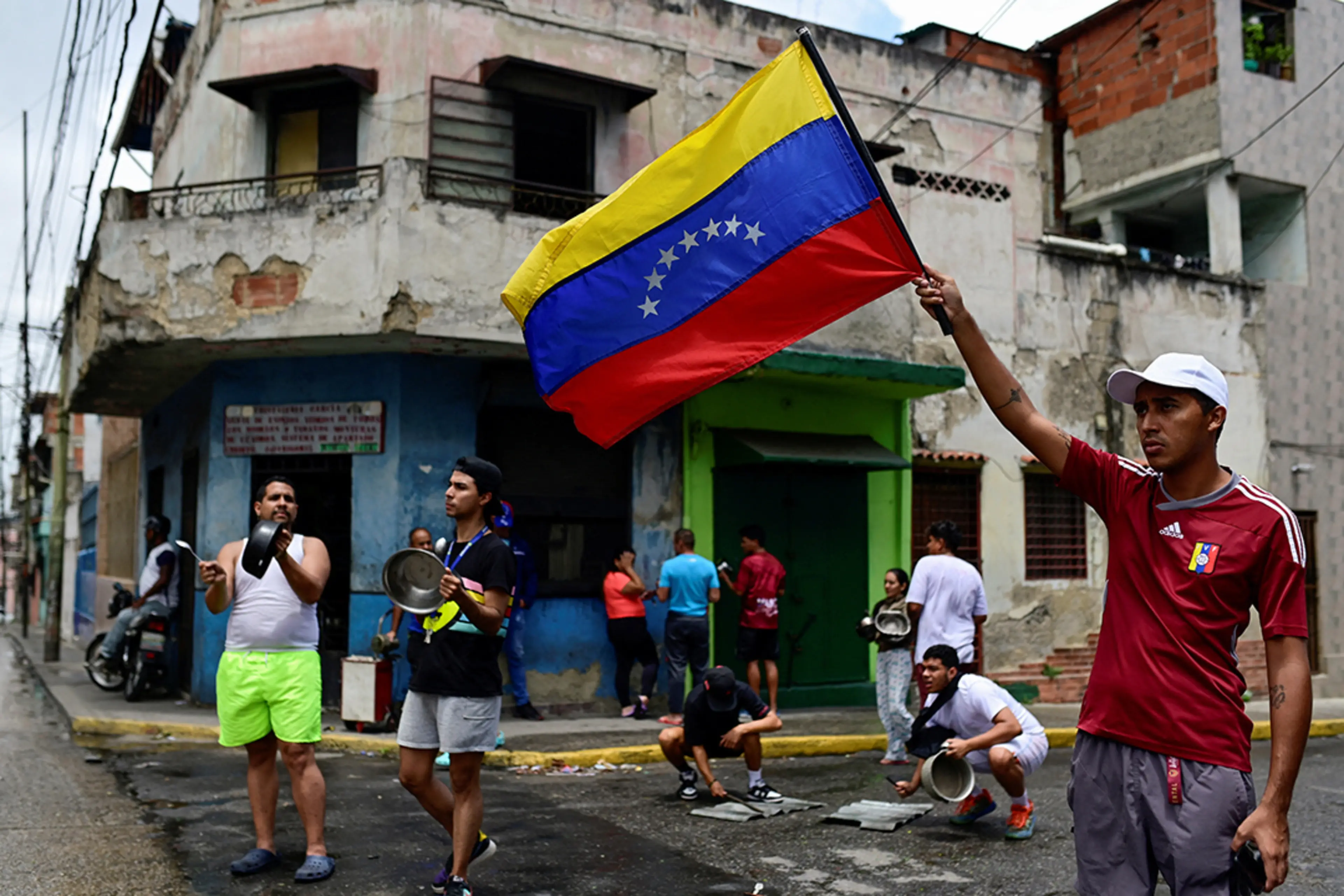
Chilean President José Antonio Kast, who won a landslide victory in December 2025 campaigning explicitly on promises to deport over three hundred thousand mostly Venezuelan irregular migrants and tackle the crime wave they've brought with them, used his first foreign visit to Buenos Aires to meet with Argentina's Javier Milei to declare his support for any action to end Maduro's "narcodictatorship." Kast didn't hedge or qualify: "It is not our responsibility to solve it, but whoever does will have our support." He called Maduro a "narcodictator" experiencing "difficult moments because of the pressure the United States is exercising," and made clear that U.S. intervention "would solve a gigantic problem for us and all of Latin America, all of South America, and even for countries in Europe." This isn't some fringe right-wing figure—Kast won fifty-eight percent of Chile's vote in an election with record turnout due to mandatory voting laws, meaning he has the strongest democratic mandate of any Chilean president in history. His campaign resonated because Chileans have watched their once-safe country transformed by Venezuelan migration. Homicide rates have climbed to their highest levels in decades. Transnational criminal organizations like Tren de Aragua have expanded extortion, kidnapping, and narcotics operations throughout Chile. The Venezuelan diaspora that fled Maduro's socialist catastrophe has brought not just desperate refugees but the criminal networks that flourished in Venezuela's lawless state—and Chilean voters responded by electing someone who promised to do something about it.
Kast's victory confirms a broader right-wing shift across Latin America, following similar electoral results in Argentina under Javier Milei, Bolivia, Honduras, El Salvador under Nayib Bukele, and Ecuador. Milei, whose anarcho-capitalist platform won in Argentina partly on promises to restore order and security, was among the first world leaders to recognize González as Venezuela's legitimate president-elect, dismissing Maduro's victory as "fraud" and condemning him as a "dictator." The Venezuelan regime responded by expelling Argentine diplomatic personnel and surrounding the Argentine embassy;where six Venezuelan opposition figures have taken asylum with police, cutting power and food supplies in what amounts to a siege. Milei's government has filed complaints with the International Criminal Court over the detention of an Argentine military police officer who entered Venezuela from Colombia. These aren't abstract diplomatic disputes—they're the actions of a regime that has declared war on democratic neighbors, that recognizes no international norms, that will continue escalating until someone stops them. The question facing the United States isn't whether intervention is justified—the legal, moral, and strategic justifications are overwhelming. The question is whether we possess the will to act when action is difficult, when critics will invoke every past mistake, when the safe political course is to issue statements and hope the problem resolves itself somehow. Beijing is asking the same question about Taiwan, and they're watching Venezuela very carefully to see what the answer reveals about American resolve.
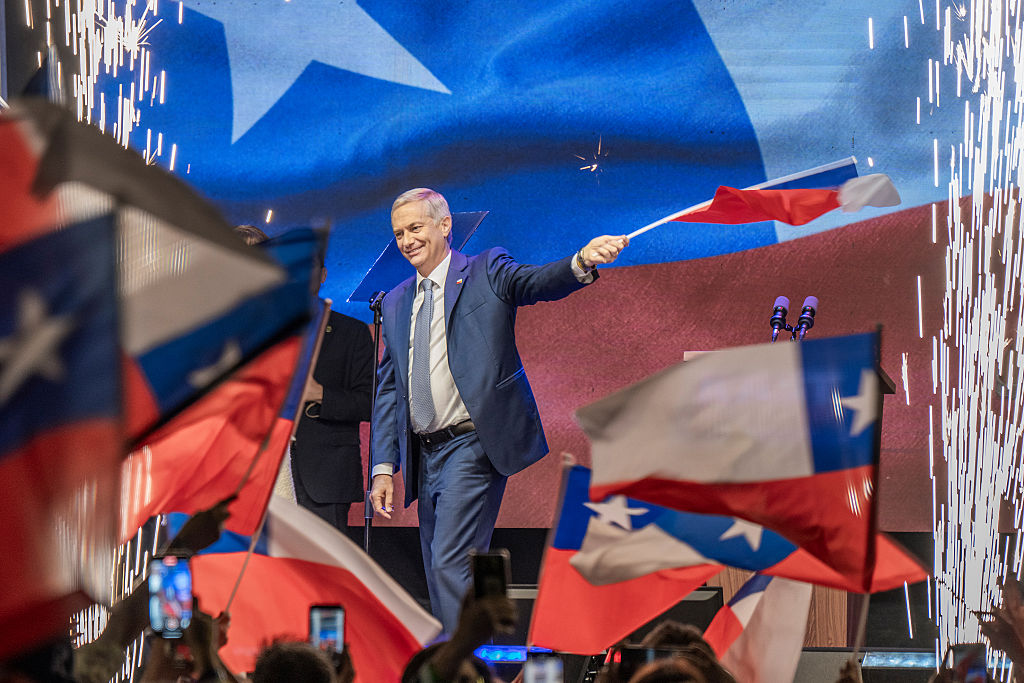
The immigration crisis emanating from Venezuela isn't some abstract humanitarian concern it's a direct threat to American security and quality of life that compounds every month Maduro remains in power. Since 2014, over seven million Venezuelans have fled the country, creating the largest refugee crisis in the Western Hemisphere's modern history. Over three hundred thirty thousand Venezuelans crossed the U.S. border in 2024 alone. And while the majority of Venezuelan migrants are decent people fleeing impossible circumstances, the migration wave has provided cover for something far more dangerous: the expansion of Tren de Aragua, Venezuela's largest transnational criminal organization, throughout the United States. The Department of Homeland Security has identified over six hundred migrants in the U.S. with possible connections to TdA, with roughly one hundred confirmed as gang members recommended for FBI watchlist placement. The gang has a known presence in fifteen states and a possible presence in eight others. Federal and local law enforcement have launched over one hundred investigations of crimes tied to suspected TdA members, including sex trafficking in Louisiana and Indiana, the point-blank shooting of two New York City police officers who survived, violent jewelry heists in Denver where gang members were caught on video pistol-whipping women, and numerous cases across Colorado, Texas, and beyond. Since December 2024, nearly two hundred TdA-linked arrests have been made across twenty-two states, reflecting an intensified crackdown but also revealing the scale of penetration that's already occurred.
The criminal pattern is consistent and chilling: TdA members enter the country as part of general migration flows from Venezuela, exploit the fact that Venezuela refuses to provide criminal background information to U.S. authorities, get released into American communities to await asylum hearings that may be years away, and immediately begin operations including human trafficking, drug distribution, extortion, armed robbery, and violence. Border Patrol agents call them "ghost criminals"—their identities misrepresented, their dates of birth fabricated, their criminal histories invisible unless they've already committed crimes inside the United States or Interpol happens to have flagged them. According to Customs and Border Protection statistics, between October 2023 and February 2024, sixteen TdA members were apprehended at the border out of one hundred ninety-four total migrants with gang affiliations—and those are just the ones caught and identified. Former Border Patrol agent Ammon Blair explained the problem succinctly: "Unless agents get a Venezuelan migrant's criminal history from Interpol or they already have a criminal record inside the United States, we won't know who they are." Venezuela doesn't cooperate. Maduro's regime has no incentive to help the United States screen out criminals because those criminals serve strategic purposes—they destabilize American communities, they create political pressure on U.S. administrations, they generate exactly the kind of chaos that authoritarian regimes exploit to discredit democratic governance. Chile has seen this pattern play out in devastating fashion—the country that was once Latin America's safest success story now faces its highest homicide rates in decades, directly correlated with the arrival of over one million Venezuelan migrants. Fox News reported that Chilean authorities attribute many violent crime cases to Venezuelans, with early waves of wealthier, educated migrants giving way to more recent arrivals who are "generally poorer, with fewer means to sustain themselves and their families," creating conditions where crime becomes survival strategy for some and organized profit for criminal networks.
The correlation between Venezuelan migration and crime increases isn't speculation or xenophobia; it's documented reality that honest policy discussion requires acknowledging. Near nearly two hundred TdA members have been arrested in the United States in just the past year for crimes ranging from attempted murder to sex trafficking to armed robbery. Carlos Aranguren-Mayora, a documented TdA member, has accumulated thirty-eight charges across five active cases in Colorado since December 2023, including robbery, kidnapping, burglary, and motor vehicle theft. The gang's modus operandi is systematic: they identify vulnerable migrant populations in their own communities and prey on them first—extortion of Venezuelan business owners, sex trafficking of Venezuelan women, violent enforcement of "protection" rackets in neighborhoods where Spanish-speaking immigrants cluster. Then they expand to the broader American population. Aurora, Colorado became a flashpoint when video emerged of armed, Spanish-speaking men entering apartment complexes, with residents and local officials confirming TdA presence though disputing Trump's characterization of a complete gang "takeover." The gang has spread to New York, Texas, Florida, Illinois, Wisconsin, and beyond, adapting the operational tactics they perfected in Venezuela's collapsed state to American cities where law enforcement is still learning to identify and counter their methods. Every month Maduro remains in power, more Venezuelans flee, more migrants enter U.S. territory, and more TdA operatives embed themselves in American communities with criminal infrastructure that will take years to root out even after the migration flow stops. Removing Maduro doesn't just restore democracy to Venezuela—it eliminates the source conditions driving this migration crisis and gives millions of Venezuelans a reason to go home instead of risking their lives to reach the United States.
The strategic case for intervention rests on understanding what makes Venezuela different from the intervention failures that haunt American foreign policy. Iraq failed because the United States invaded a country where significant portions of the population supported Saddam Hussein's regime, where sectarian divisions created competing centers of power, where removing the dictator created a power vacuum that multiple factions rushed to fill with violence. Libya failed because NATO intervention prolonged a civil war that was ending, turned a localized conflict into a seven-month bloodbath, and left behind a failed state with competing militias and no functional government. Afghanistan failed because the United States attempted to impose political structures alien to Afghan culture, fought an insurgency with genuine grassroots support in substantial portions of the country, and pursued goals far beyond the original mission. Venezuela is none of these things. Venezuela held a free and fair election in July 2024—the Carter Center validated it, international observers confirmed it, the opposition collected and published the actual voting tallies from over eighty percent of polling stations showing González winning by a landslide. The Venezuelan people want Maduro gone. They voted him out. They documented their vote. They watched him steal the election anyway. There is no ambiguity about political legitimacy, no question about who the Venezuelan people chose to lead them. The international community, including Chile, Argentina, the European Union, and the United States, recognizes González as the rightful president. Installing him doesn't require nation-building or cultural transformation—it requires removing the illegitimate regime that's preventing him from taking the office he legitimately won.
Panama 1989 provides the relevant template, not Iraq 2003. When the United States invaded Panama to remove Manuel Noriega—a former CIA asset who had gone rogue, rigged elections, annulled the results when the opposition won anyway, engaged in drug trafficking, and harassed U.S. forces—the operation succeeded because it had clear objectives, overwhelming force, existing U.S. military presence in-country, and a legitimate opposition leader ready to assume power immediately. Operation Just Cause deployed over twenty-seven thousand U.S. troops who secured the country within days. Noriega hid in the Vatican Embassy before surrendering on January 3, 1990. Guillermo Endara, who had won the May 1989 election before Noriega nullified it, was sworn in as president and began rebuilding Panama's democratic institutions. The operation succeeded because it was decisive, because it installed the democratically elected leader, and because the Panamanian people welcomed the removal of a dictator they had voted out. The criticism of Panama isn't that intervention failed—it's that intervention's very success created dangerous false confidence that made Iraq possible. Senior officials who served under George H.W. Bush "drew important lessons from the invasion"—that "a small and mobile force using overwhelming firepower could decapitate an enemy regime and establish the conditions for the development of a democratic state." They extrapolated from Panama's unique circumstances—tiny country, heavy U.S. military presence already established, no ethnic divisions—to assume those lessons applied everywhere. Iraq proved they didn't. But Venezuela shares Panama's relevant characteristics: clear electoral outcome stolen by dictator, legitimate democratic opposition ready to govern, population desperate for the dictator's removal, and criminal regime whose support rests on patronage rather than ideology.
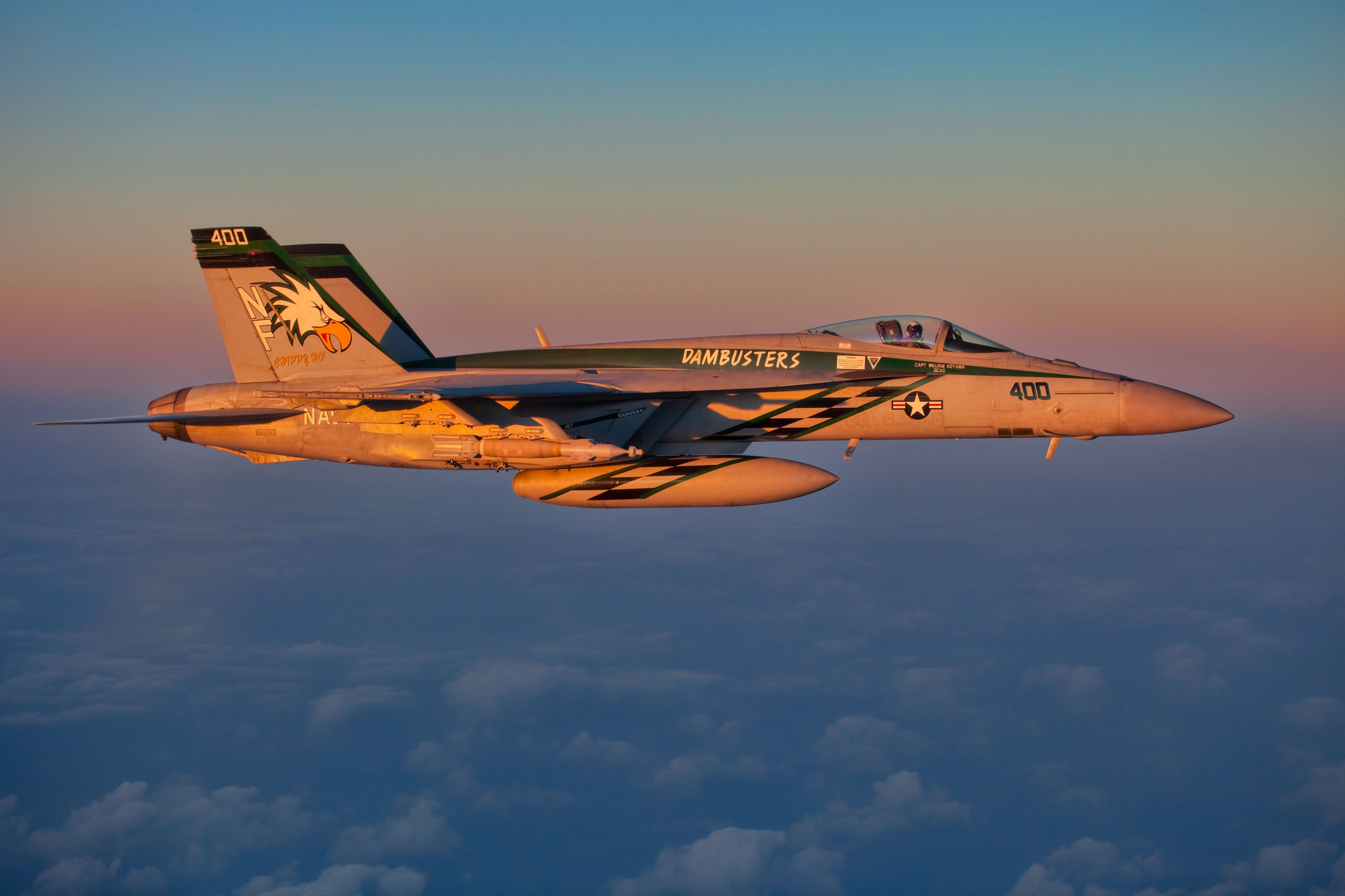
The operational requirements for success in Venezuela follow directly from understanding these distinctions. First, the political objective must be crystal clear: remove Maduro and install González as the democratically elected president that independent observers confirm he is. Not regime change in the abstract, not nation-building, not creating the conditions for eventual democracy—install the person who won the election that international observers validated. This clarity eliminates the mission creep that plagued Iraq and Afghanistan. Second, the operation must be overwhelming and decisive, not incremental. Colin Powell's doctrine from Panama applies: destroy the regime's capacity to resist rather than attempting to snatch individual leaders. The Venezuelan military, degraded after years of corruption and resource scarcity, cannot withstand American airpower and precision strikes. Their Russian-supplied S-300VM air defense systems and Su-30 Flankers are maintained poorly and operated by forces whose morale depends entirely on Maduro's patronage networks. Once those networks collapse—once it becomes clear the regime is finished—defection becomes survival strategy for military officers who currently support Maduro only because they see no alternative. Third, preparation must precede action. The invasion should follow maximum diplomatic and economic pressure that isolates the regime, creates internal dissension, and positions regional allies to provide immediate post-intervention support. Chile, Argentina, and other regional governments have already signaled they will support whoever removes Maduro, that diplomatic groundwork changes the calculus fundamentally from Iraq, where regional opposition complicated everything.
Fourth, intelligence must be exquisite and action must be rapid. The invasion must present a fait accompli before international actors can mobilize opposition, before domestic critics can organize resistance, before Maduro can disperse and hide. Panama worked partly because twenty-seven thousand troops secured the country faster than opposition could materialize. Venezuela requires similar decisive velocity, not the gradual escalation that gives adversaries time to prepare. Fifth, post-intervention governance must transfer immediately to González and his democratic coalition, who have been planning for this transition for years. The opposition isn't some exile group disconnected from the country—they're Venezuelan civil society leaders, former government officials, business leaders, and civil society organizers who have been working inside Venezuela under severe repression to maintain democratic structures. They know how to govern. They know what needs to be rebuilt. They have broad public support. The U.S. role ends when González takes office, no occupation, no nation-building, no attempts to remake Venezuelan society. Just remove the criminal regime preventing democracy from functioning and let Venezuelans rebuild their country with international economic assistance. Sixth and finally, the operation must respect constraints even in using force. Minimize civilian casualties, avoid unnecessary destruction, protect critical infrastructure including oil facilities, and demonstrate that the goal is liberation rather than conquest. These "servitudes" in strategic terms, the self-imposed limits on military action based on moral and political considerations—aren't weakness. They're essential to maintaining legitimacy and preventing the operation from generating the kind of resentment that fuels insurgencies.
The scenario that makes intervention most likely to succeed exploits Venezuela's specific vulnerabilities while avoiding the pitfalls that plagued previous operations. Venezuela's military, while nominally large with approximately one hundred twenty-three thousand active personnel plus massive militia claims, operates with degraded equipment, poor training, low morale, and command structures dependent on regime patronage rather than professional competence. They cannot match American airpower. They cannot prevent precision strikes on regime headquarters, military installations, and command facilities. Their air defenses, while including some capable Russian systems, lack the depth and integration to deny American aircraft the operational freedom to destroy regime targets systematically. More importantly, the military's loyalty to Maduro is transactional rather than ideological, officers support him because he controls resources and punishment, not because they believe in socialist revolution. Once it becomes clear the regime is finished, once regime targets are destroyed and Maduro's ability to reward or punish evaporates, defection cascades. Venezuelan military culture recognizes institutional preservation, officers will cut deals to survive rather than die defending a obviously defeated dictator. The invasion shouldn't aim to destroy the entire Venezuelan military, it should aim to destroy Maduro's capacity to command them, making clear that the military's future lies in supporting the legitimate democratic government rather than a defeated criminal regime.
The Venezuelan people's response matters enormously. Unlike Iraq where substantial populations supported Saddam Hussein's regime, or Afghanistan where the Taliban enjoyed genuine grassroots support in Pashtun areas, or Libya where Gaddafi retained meaningful loyalty in certain regions—Venezuela's population overwhelmingly rejects Maduro. They voted him out. They documented their vote with photographs and tallies from tens of thousands of polling stations. They watched him steal the election anyway. They've endured hyperinflation that destroyed their savings, shortages that forced them to wait hours for basic necessities, political repression that imprisoned opposition leaders, and crime rates that made Caracas one of the world's most dangerous cities. The population isn't going to mount an insurgency against forces removing the dictator they voted out—they're going to welcome it, just as Panamanians welcomed U.S. forces removing Noriega in 1989. María Corina Machado, the opposition leader who won Venezuela's primary with over ninety percent of the vote before the regime barred her from running, has spent sixteen months in hiding avoiding arrest. She won the 2025 Nobel Peace Prize for her courageous leadership while facing constant regime attempts to capture or kill her. When regime change happens, she and González won't need to establish legitimacy—they already have it. The Venezuelan people gave it to them in the election Maduro stole. International democratic institutions have recognized it. The only thing preventing them from governing is Maduro's criminal regime, and removing that obstacle restores rather than disrupts Venezuela's democratic mandate.
The regional coalition demanding action represents a historic opportunity that may not persist indefinitely. Kast in Chile, Milei in Argentina, Bukele in El Salvador, Noboa in Ecuador, these leaders represent a generational shift in Latin American politics, a rejection of the left-wing populism that accommodated Maduro, a demand for security and order after years of chaos and crime increases directly attributable to Venezuela's collapse. They're not asking the United States to solve their problems—they're signaling they'll support whoever solves a problem that's destroying their countries. Kast campaigned on deporting three hundred thousand Venezuelan migrants and won decisively because Chileans have watched their safe society transformed by crime that correlates directly with Venezuelan arrivals. He's not going to criticize U.S. intervention that eliminates the source of that migration—he'll celebrate it. Milei has already recognized González, expelled Venezuelan diplomats, and filed ICC complaints over Venezuelan regime actions. Bukele built the world's most notorious prison to house gang members and dropped El Salvador's murder rate by over ninety percent through aggressive enforcement that wouldn't be tolerated in the United States. None of these leaders will condemn U.S. intervention that removes a dictator whose regime has destabilized the entire region. They'll provide political cover, diplomatic support, and practical assistance for post-intervention reconstruction. This regional consensus is historically unusual and strategically invaluable—it addresses the core criticism of Iraq and Libya where regional opposition complicated intervention from day one. In Venezuela, regional neighbors are begging for action, not opposing it.
The economic case for intervention goes beyond humanitarian concerns to hard strategic interests. Venezuela sits on the world's largest proven oil reserves—over three hundred billion barrels, exceeding Saudi Arabia. Under competent management, Venezuela could be producing three to four million barrels daily instead of the roughly seven hundred thousand barrels they produce currently under Maduro's catastrophic mismanagement. That production capacity matters enormously for global energy markets, for U.S. strategic interests in reducing dependence on Middle Eastern oil, and for Venezuela's own reconstruction. A democratic Venezuela that properly manages its oil resources becomes an economic powerhouse in South America, a reliable U.S. partner for energy security, and a magnet for investment that rebuilds the economy and creates incentives for refugees to return home. The Trump administration hasn't hidden this calculation, Treasury Secretary Scott Bessent explicitly referenced forming "an economic bridge with our allies" rather than "having to shoot at narco gunboats." The economic opportunity Venezuela represents under democratic governance makes intervention a strategic investment rather than just expense. Remove Maduro, install González, help Venezuela rebuild its oil sector with American and international investment, and the country that's been exporting refugees and criminals for a decade becomes a success story that draws those millions of displaced Venezuelans back home. The immigration crisis that's overwhelming Chile, Colombia, Peru, Ecuador, and increasingly the United States, it reverses when Venezuela becomes a place where people want to live again instead of flee from.
The China-Taiwan calculation introduces stakes that exceed Venezuela's importance as an individual country, but not in the way conventional deterrence theory suggests. Beijing is watching Venezuela extremely carefully, not to assess whether America will defend Taiwan with military force, but to learn which strategy works best for taking territory the United States claims to protect. If decisive U.S. intervention removes Maduro successfully, Chinese strategists won't conclude that direct military invasion triggers overwhelming American response and should therefore be avoided. They'll conclude something far more dangerous: that gradual, incremental pressure works better than dramatic confrontation because it never triggers the threshold that prompts decisive action. The Venezuela lesson for China isn't about deterrence, it's about methodology. Watch how this plays out. The United States demonstrates it can and will remove a hostile regime in its own hemisphere when that regime crosses enough red lines simultaneously: stolen election, drug trafficking, refugee crisis, criminal gangs, regime that thumbs its nose at international norms. China observes and learns: don't cross all the red lines at once. Don't invade Taiwan in a Pearl Harbor scenario that forces immediate American response. Instead, apply pressure gradually, incrementally, through methods that individually seem too small to justify military intervention but cumulatively achieve the same objective, effective control of Taiwan without ever triggering the decisive response that regime change in Venezuela would demonstrate America remains capable of executing.
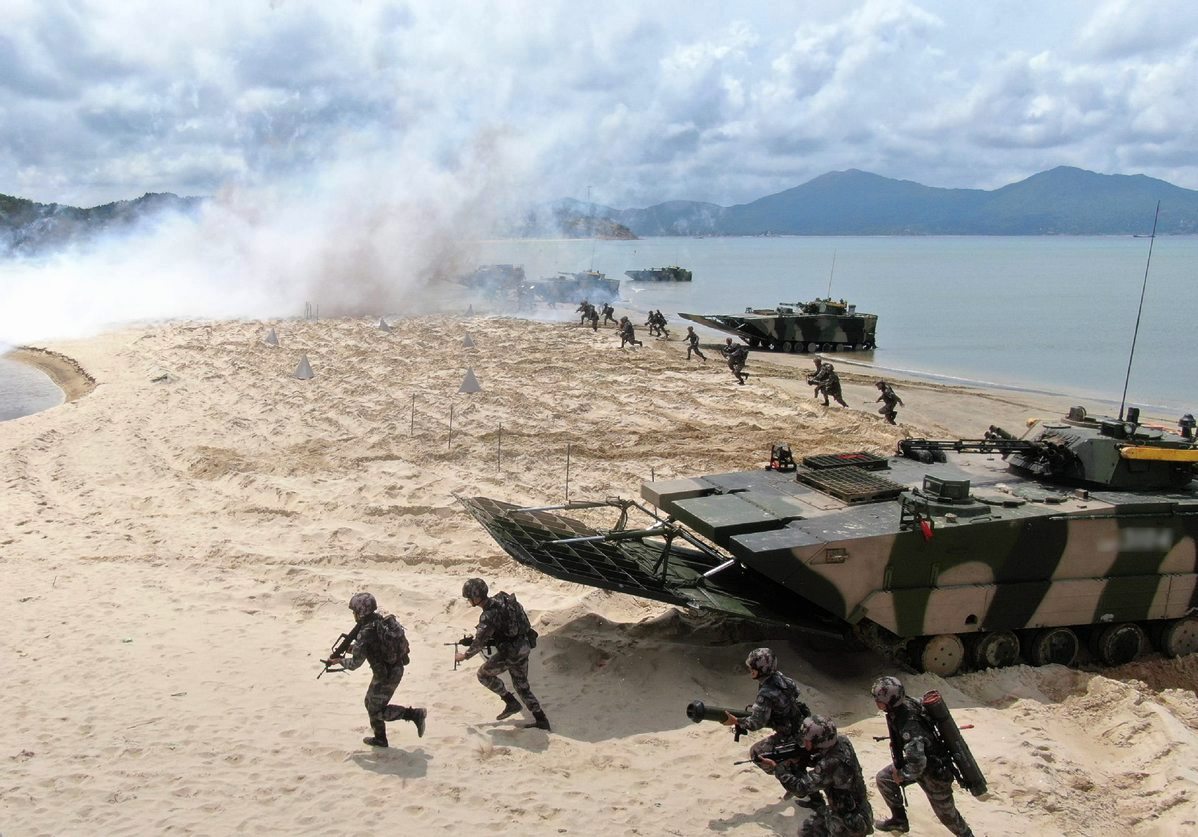
The strategy Chinese planners would adopt isn't invasion, it's a blockade strategy combined with salami-slicing administrative control, economic coercion, and gray-zone operations that gradually hollow out Taiwan's sovereignty until functional independence disappears and everyone suddenly realizes China exercises effective control without having fired a shot that would constitute an invasion triggering U.S. treaty obligations. Start with "routine" naval exercises that just happen to disrupt shipping lanes to Taiwan. Impose "safety inspections" on vessels headed to Taiwanese ports that delay cargo enough to make trade unprofitable. Announce "air defense identification zones" that Taiwanese aircraft can't enter without Chinese permission. Require "administrative coordination" for flights between Taiwan and other countries. Implement "customs procedures" that give Chinese officials authority to inspect and approve shipments. Each individual measure seems like bureaucratic friction, not worth starting a war over. But the cumulative effect over months and years is that Taiwan loses control over its own ports, its own airspace, its own customs, its own borders, all without China ever declaring an invasion or establishing formal sovereignty. It's the frog in slowly heating water. Each temperature increase seems tolerable. The frog adjusts. The frog doesn't jump out because no single moment triggers the survival instinct. And then the water boils and the frog is dead before it realizes what happened.
This isn't theoretical speculation, it's exactly how China has approached South China Sea territorial disputes, building artificial islands incrementally, establishing administrative control gradually, creating facts on the ground slowly enough that no single step justified military response from other claimants. Apply that same methodology to Taiwan at larger scale. Economic coercion starts with preferential trade terms for Taiwanese businesses that "coordinate" with Beijing. Then sectors of Taiwan's economy become dependent on Chinese market access that can be withdrawn if Taiwan doesn't cooperate with administrative requirements. China announces that certain Taiwanese officials can't travel internationally without Chinese approval, initially just officials who've made "provocative" statements, but the list grows. Military pressure increases through constant exercises near Taiwan that normalize Chinese military presence, making it impossible to distinguish between exercise and actual preparation. Cyberattacks disrupt Taiwan's critical infrastructure periodically—never quite bad enough to constitute an act of war, always plausibly deniable, but sufficient to demonstrate Taiwan's vulnerability. Chinese "civilian" vessels swarm Taiwan's ports and territorial waters, making enforcement against genuine military vessels politically complicated. And throughout all of this, Beijing emphasizes these are internal Chinese administrative matters, not international disputes, making U.S. intervention look like interference in China's domestic affairs rather than defense of an ally.
The genius of this approach from China's perspective is that it never triggers the threshold that would justify the kind of decisive military response that removing Maduro would demonstrate remains possible. Each individual measure can be portrayed as "not worth starting World War III over", and that framing has enormous domestic political power in democratic societies where leaders must justify casualties to skeptical publics. Would the United States go to war with China because Beijing requires "safety inspections" of cargo ships headed to Taiwan? Would we trade San Francisco for Taipei over Chinese customs procedures? Would we risk nuclear escalation because China establishes an ADIZ that overlaps Taiwan's airspace? The answer to each individual question is probably no—which means China can implement all of them over time, and by the time the cumulative effect becomes undeniable, reversing it requires the very confrontation that we weren't willing to initiate over any individual measure. Taiwan becomes like Czechoslovakia in 1938, not conquered through dramatic invasion but hollowed out through incremental concessions until sovereignty exists only nominally and reversing the process requires more willingness to fight than preserving independence in the first place would have required. The lesson China learns from successful Venezuela intervention isn't that America will defend allies, it's that America will defend allies against dramatic invasions but won't sustain political will to counter gradual erosion, which means gradual erosion is the winning strategy for taking territory America claims to protect.
The historical precedent for this strategy extends beyond China's South China Sea approach to Russia's methodology in Ukraine before the 2022 invasion. Russian forces didn't invade all at once—they took Crimea in 2014, supported separatists in Donbas, established "facts on the ground" gradually, tested Western resolve repeatedly, and found that incremental aggression generated sanctions and statements but not the military response that full invasion might trigger. The 2022 invasion came only after years of gradual pressure had already hollowed out Ukrainian sovereignty in contested regions, and even then Russia calculated that Western response would be limited to economic measures because the gradual erosion had already shifted baselines for what counted as unacceptable aggression. China can apply the same playbook to Taiwan with even more sophistication because economic interdependence gives Beijing leverage that Russia never possessed. Taiwan's economy depends heavily on mainland Chinese trade. Taiwanese companies manufacture substantial portions of their products in mainland facilities. The economic pain China can inflict through "administrative measures" exceeds any sanctions package the West could assemble in response, making the cost-benefit analysis of resistance increasingly unfavorable for Taiwan with each incremental imposition. And unlike Ukraine's situation where NATO expansion and Western integration offered potential counterbalance, Taiwan faces geographic isolation that makes Chinese economic coercion nearly impossible to counter without massive sustained international commitment that may not materialize for gradual pressure even if it would for invasion.
The most disturbing aspect of this scenario is how difficult it becomes to identify the moment when intervention would have succeeded versus the moment when it's too late. With Maduro, the moment is clear—he stole an election, the international community documented the theft, remove him and install the legitimate winner. Clean decision point. With Taiwan under gradual pressure, when exactly does the United States intervene? When China announces shipping inspections? Too early, looks like overreaction to administrative measures. When Taiwan's economy becomes dependent on Chinese approval? Too late, economic coercion is already baked in. When Chinese officials exercise veto over Taiwanese government decisions? Way too late—sovereignty is already hollow. The nature of incremental erosion is that it defeats the clarity required for decisive action. Each step seems too small to justify war. The cumulative effect becomes evident only after the accumulation makes reversal prohibitively expensive. This is why the Venezuela scenario matters so much strategically—not because successful intervention demonstrates American resolve to fight for allies, but because it demonstrates the necessity of stopping threats before they metastasize into problems that require far more costly solutions later. The parallel lesson for Taiwan isn't "invade before America intervenes"—it's "don't invade at all, just apply pressure gradually until Taiwan is effectively controlled without ever triggering the intervention threshold." And if China pursues that strategy successfully, the world wakes up one day to discover Taiwan has lost its independence through a thousand small concessions, none of which individually seemed worth fighting over, all of which together mean the semiconductor hub producing sixty percent of global advanced chips now answers to Beijing. At which point reversing the situation requires exactly the kind of major-power confrontation that the gradual approach was designed to make politically impossible for democratic leaders facing domestic constituencies who will ask why we didn't act sooner when the cost would have been lower.
The counterarguments to intervention deserve serious engagement rather than dismissal. Critics will cite Venezuela's size compared to Panama, the country is twelve times larger, spans diverse geography including mountains and dense jungle, and includes urban areas like Caracas that could host extended urban combat if regime loyalists resist. Valid concern. The response is that U.S. military capabilities have advanced enormously since 1989, that precision strikes can decapitate regime command structures without requiring large-scale ground occupation, and that the goal isn't to occupy Venezuela but to destroy Maduro's capacity to prevent democratic governance. Critics will cite Maduro's claims of millions of militia members ready to resist invasion—the "Bolivarian Militia" supposedly numbering between four and nine million members. Analysis from HSToday indicates these numbers are "politics of perception" rather than military reality, that actual combat capability is far lower than claimed, but even taking the threat seriously, militias dependent on regime logistics and command collapse when the regime collapses. They're not ideological fighters willing to die for socialism—they're people who joined for benefits and status that disappear when Maduro's gone. Critics will cite Russia's provision of arms and advisors to Venezuela, China's investments exceeding sixty billion dollars, Iran's drone technology and GPS jammers, Cuba's fifteen thousand security personnel. These external supporters complicate the picture but don't fundamentally change it, Russia isn't going to risk military confrontation with the United States over Venezuela, China prioritizes economic access that democratic Venezuela would continue providing, Iran and Cuba lack power projection capability to meaningfully resist U.S. intervention. The external support networks matter for Maduro's survival against internal opposition but collapse against American military action.
Critics will cite international law and the UN Charter's prohibition on the use of force against sovereign states except in self-defense. The legal arguments for intervention rest on multiple foundations: the responsibility to protect populations from mass atrocities, the legitimacy of supporting democratically elected governments against illegitimate usurpers, the inherent right of self-defense against transnational criminal organizations operating with regime support to destabilize neighboring countries, and the treaty rights the United States maintains for protecting hemispheric security. Panama 1989 faced similar legal criticisms, the UN General Assembly condemned it seventy-five to twenty, the OAS passed resolutions opposing it, but the operation succeeded anyway and history has largely vindicated it despite the international criticism. Legal justifications matter for maintaining political support and international legitimacy, but they shouldn't paralyze necessary action when the alternative is allowing catastrophe to continue. Critics will cite the risk that intervention backfires, that Maduro becomes a martyr, that Venezuelan nationalism rallies around resisting American "imperialism." This argument misunderstands Venezuelan political reality, Maduro has no nationalist legitimacy because the Venezuelan people voted him out and he stole the election anyway. You can't rally nationalist sentiment to defend a government that ninety-three percent of the population wants removed according to independent polling. The regime survives through fear and patronage, not popular support. Remove the regime's capacity to maintain fear and patronage, and opposition evaporates rather than intensifying.
The most serious criticism is that post-intervention reconstruction could fail, that removing Maduro creates opportunities for other authoritarian actors, that Venezuela's oil wealth could fuel corruption in a new government, that criminal networks could persist even after regime change. These risks are real. They're also manageable in ways that Iraq's sectarian violence and Afghanistan's tribal conflicts weren't. González and Machado represent Venezuelan democratic civil society, not exiles disconnected from the country or factional leaders with narrow bases. They have detailed plans for reconstruction, relationships with international financial institutions, and commitment to transparent governance that makes them credible recipients of reconstruction assistance. The Venezuelan economy needs massive investment to rebuild infrastructure, restart oil production, and create opportunities that give people alternatives to crime or emigration. That investment won't flow to Maduro's regime but will flow to democratic governance that respects property rights, honors contracts, and maintains rule of law. The economic incentives align perfectly with political goals—help Venezuela rebuild, and you create both economic opportunity and strategic partnership while eliminating the migration crisis. The historical lesson from successful interventions isn't that they're risk-free—it's that decisive action with clear objectives and strong post-intervention plans succeeds where incremental approaches and ambiguous goals fail. Panama succeeded because the United States knew what it wanted to achieve, deployed overwhelming force to achieve it quickly, had a legitimate democratic leader ready to assume power immediately, and then left rather than attempting to rebuild Panamanian society. Venezuela offers the same opportunity if American leadership possesses the will to take it.
The timing matters critically. Maduro has just stolen another election, just inaugurated himself for another term despite overwhelming evidence of fraud, just demonstrated that he will never peacefully relinquish power regardless of how decisively the Venezuelan people reject him. The international community's recognition of this reality is at its peak—Chile, Argentina, the EU, and the United States all recognize González as the legitimate president. Regional support for intervention from Kast and Milei provides political cover that may not persist if leftist governments return to power in future elections. The Trump administration has demonstrated willingness to use force when strategic objectives demand it, has positioned military assets in the region, and has escalated pressure systematically. The window for decisive action is open now but may close as domestic political considerations shift, as international attention moves to other crises, as Maduro consolidates his stolen power. The Venezuelan people have endured decades of suffering under first Chávez and now Maduro—how many more stolen elections must they witness before the international community acts? How many more millions must flee before their departure destabilizes the entire hemisphere? How many more American communities must absorb criminal gang members who exploit refugee flows before the source is addressed? The moral case for action compounds daily. The strategic case strengthens as Venezuelan state failure spreads instability regionally. The political case exists now through regional consensus that might fracture later. Every day of delay makes the eventual intervention more costly, makes reconstruction more difficult, makes reversing the damage harder. The calculation isn't whether intervention carries risks—of course it does. The calculation is whether those risks exceed the certain escalating catastrophe of continued inaction. Any honest strategic analysis concludes they don't.
If intervention succeeds—if the operation removes Maduro decisively, installs González as the democratically elected president, and helps Venezuela begin rebuilding with international support—the effects cascade far beyond Venezuela. The seven million Venezuelan refugees scattered across Latin America and beyond gain reason to return home instead of seeking permanent resettlement. Chile's crime rates stop climbing as the flow of new migrants reverses. Colombia's burden of hosting 2.5 million Venezuelan refugees begins to ease. Ecuador, Peru, Brazil, every country strained by Venezuelan displacement gets relief. The United States stemshes the flow of migrants crossing the southern border from Venezuela, eliminates the cover that Tren de Aragua uses to infiltrate American communities, and removes the criminal networks' source of recruits and operational base. Oil production in Venezuela rebounds under competent management, increasing global supply and strengthening American energy security. A functional democracy in Venezuela strengthens the regional architecture of democratic governance, demonstrates that electoral fraud won't be tolerated indefinitely, and provides positive example rather than the cautionary tale Venezuela has become. And critically for broader strategic competition, successful intervention in Venezuela demonstrates American willingness to defend democratic principles with action when necessary, signals to Beijing that American commitments mean something, and strengthens deterrence against Chinese adventurism in Taiwan by proving the United States retains both capability and will to project power decisively when strategic imperatives demand it.
The Venezuela crisis ultimately presents a choice between two futures. In one future, the international community issues statements, imposes sanctions that Maduro routes around, watches him steal another election in five years, and allows Venezuelan state failure to continue exporting millions more refugees, expanding criminal networks, and demonstrating to dictators everywhere that stealing elections carries no meaningful consequences if you're willing to endure criticism and outlast attention spans. In that future, Chile becomes less safe every year, American communities face escalating gang violence from transnational criminal organizations, Venezuela's oil wealth continues to be squandered under corrupt mismanagement, and Chinese strategists conclude that American commitments to Taiwan are hollow because the United States won't even defend democratic principles in its own hemisphere when costs are minimal. In the other future, the United States leads a coalition to remove Maduro decisively, installs the democratically elected president that international observers confirm won the July 2024 election, helps Venezuela rebuild its economy and institutions, watches millions of Venezuelan refugees return home as conditions improve, sees crime rates decline as the source of instability is addressed, strengthens hemispheric democratic governance, and demonstrates to Beijing that American commitments mean something when tested. The choice isn't between intervention and peace, it's between intervention now under favorable conditions with regional support and intervention later under far worse circumstances, or allowing catastrophe to compound indefinitely while paying escalating costs for inaction. Strategic clarity demands recognizing which choice serves American interests, hemispheric stability, and the defense of democratic principles that ultimately determine whether free societies can compete successfully against authoritarian alternatives. The Venezuelan people made their choice in July 2024 when they voted decisively for González and democracy. The question is whether the free world possesses sufficient resolve to help them achieve what they voted for, or whether we'll watch another stolen election go unanswered while dictators everywhere take notes about what the democratic world tolerates when tested. Maduro is watching. Beijing is watching. The hemisphere is watching. The time for decisive action has arrived, and history will judge what we choose to do with it.
References
Venezuelan Election Fraud:
Wikipedia. 2024 Venezuelan presidential election. Levitsky quote on electoral fraud.
Carter Center. 2024 Venezuelan Presidential Election validation showing González victory with ~67% from 24,000+ polling stations.
Trump Administration Actions:
CBS News. USS Gerald R. Ford carrier arrives in Caribbean. December 2024.
Wikipedia. 2025 U.S. naval deployment in the Caribbean. Operation Southern Spear documentation.
Chilean President Kast Support:
Cuba Headlines. President-Elect of Chile Supports Potential U.S. Intervention. December 16, 2024.
Voz.us. Chile's new president supports any international action to end Maduro's tyranny. December 17, 2024.
Fox News. Kast wins Chile presidency with 58% on security platform. December 15, 2024.
Infobae. Kast calificó a Maduro como "un narcodictador". December 17, 2024.
Argentine President Milei Support:
EJIL: Talk! Argentina v Venezuela diplomatic tensions. January 8, 2025.
Wikipedia. Javier Milei. Documentation of recognizing González and condemning Maduro.
Chilean Crime Statistics:
Fox News. Violent crime crisis reshapes Chile. "Homicide rates climbed to highest levels in decades."
San Diego Voice & Viewpoint. Chile's New President Promises 'Iron Fist'. Professor Fruhling: "Venezuelans are almost a third of all legally registered foreigners living in Chile. Many cases of violence have been attributed to them."
Tren de Aragua U.S. Crime Statistics:
NBC News. DHS seeking 600+ migrants for possible TdA ties. October 23, 2024. 100 confirmed gang members on FBI watchlist, presence in 15 states.
NBC News. 'Ghost criminals': Venezuelan gang members slipping into U.S. June 13, 2024. 100+ federal investigations.
Tren de Aragua Activity Monitor. TdA Report 01. February 14, 2025. Nearly 200 arrests across 22 states since December 2024.
FactCheck.org. Q&A on Alien Enemies Act and Tren de Aragua. March 21, 2025. CBP: 16 TdA members of 194 gang-affiliated migrants apprehended.
NewsNation. What is Tren de Aragua gang? March 17, 2025. Treasury/State Department designations.
Panama 1989 Historical Analysis:
Taylor & Francis. Paving the Way for Baghdad: The US Invasion of Panama, 1989. International History Review, Vol 41, No 6.
Responsible Statecraft. US invasion of Panama was first step toward 'forever wars'. May 13, 2025.
Wikipedia. United States invasion of Panama. 27,684 U.S. troops deployed, Noriega surrendered January 3, 1990.
Venezuela Military Capabilities:
War on the Rocks. Weak in Battle, Dangerous in Resistance. December 2024.
The War Zone. Status Of Venezuela's Air Defense Capabilities.
Military.com. Maduro's People's War: Asymmetric Trap. November 20, 2025.
China-Taiwan Analysis:
Global Guardian. Will China Invade Taiwan? Admiral Davidson's 2027 timeline.
USCC. Dangerous Period for Cross-Strait Deterrence. November 2021.
CSIS. Taiwan Strait wargame results showing allied victory at catastrophic cost.
Regional Politics:
Newsweek. Latin America's Failure to Act on Venezuelan Tyranny.
Crisis Group. Beware the Slide Toward Regime Change in Venezuela.