November 16, 2025 - Andrew Cook
The Sharpe Ratio Mindset: Why Consistent Returns Beat Spectacular Profits
On the discipline of chasing consistency over chaos, and why the most boring traders often build the most enduring wealth.
There's a specific kind of trader who makes for terrible dinner conversation but exceptional returns over time, and understanding why requires unlearning almost everything that popular trading culture teaches you about success. These traders don't have war stories about the time they made six figures on a single position or the week they caught a momentum trade that went parabolic. They have spreadsheets showing consistent monthly returns that compound relentlessly over years, risk-adjusted performance metrics that would make an institutional allocator weep with joy, and a deeply boring approach to markets that treats speculation less like a casino and more like a manufacturing process with measurable inputs and predictable outputs. When you ask them about their best trade, they'll tell you about their process. When you ask about their worst drawdown, they'll show you how their position sizing prevented it from mattering. And when you ask what they're excited about in the markets right now, they'll describe risk-reward ratios and statistical edges with the enthusiasm most people reserve for discussing paint drying. This is not sexy. This does not go viral on trading Twitter. This will never be featured in a documentary about financial mavericks. And this is precisely why it works.
The foundational mistake that destroys most traders isn't a lack of market knowledge or insufficient technical skill or even bad luck in timing. It's the misalignment between what they're optimizing for and what actually produces sustainable wealth. They're chasing returns—the bigger the better, the faster the better, the more dramatic the better. They want to double their account in a month, to catch the next ten-bagger, to have that story they can tell about the time they predicted the crash or rode the rally or outsmarted the market in some spectacular fashion. And markets, being efficient destroyers of misaligned incentives, will eventually accommodate this desire by providing exactly the kind of volatile, high-variance outcomes that produce great stories and terrible risk-adjusted returns. You'll get your spectacular win, probably sooner than you think. You'll feel vindicated and brilliant and like you've unlocked some secret that the boring consistent traders haven't figured out. And then the market will take it back, usually with interest, because you've optimized for the wrong thing and built a system that can't survive the inevitable periods when your particular edge stops working or your timing is off or the market regime shifts in ways your spectacular-win-seeking approach can't accommodate.
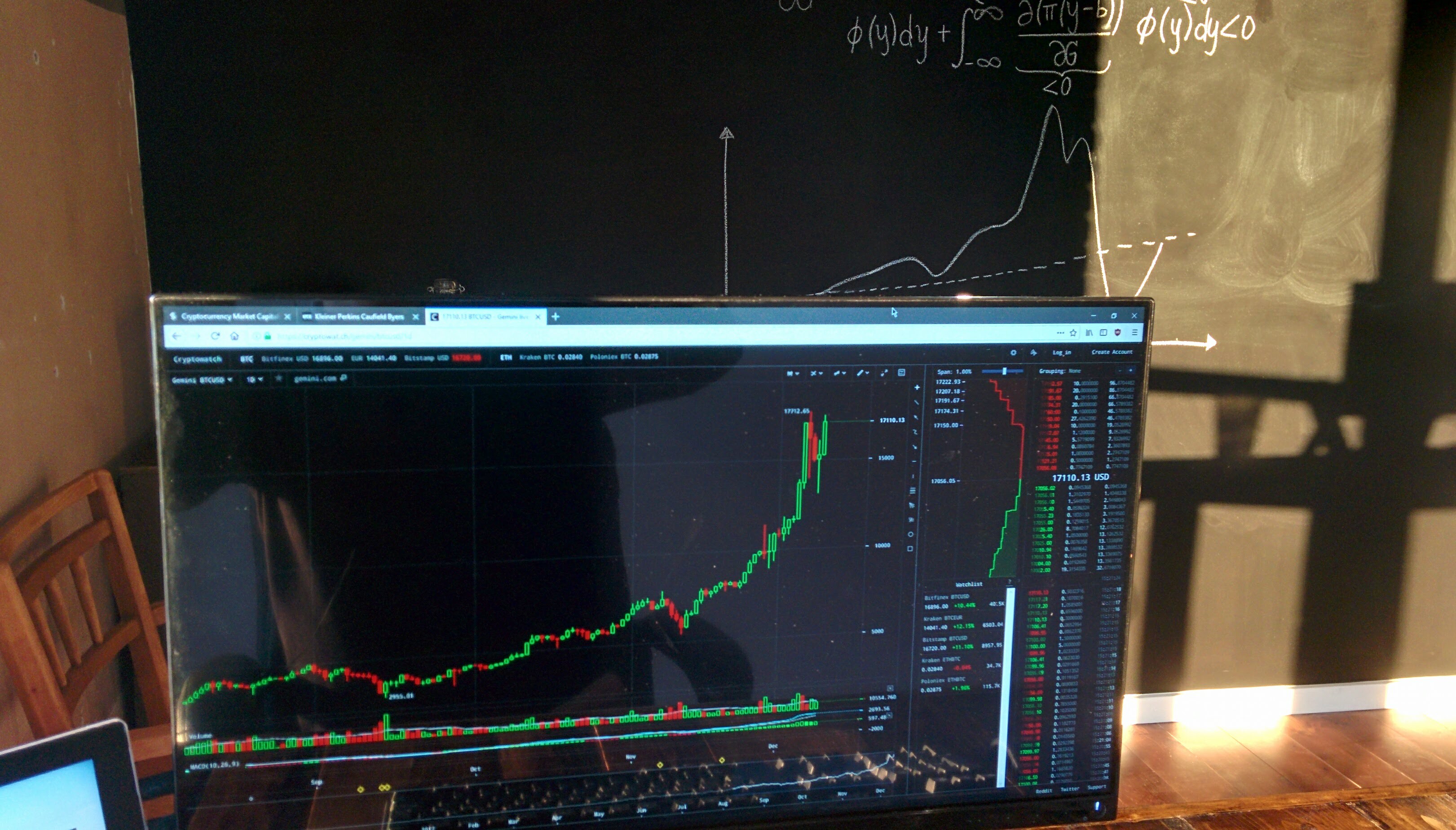
The Sharpe ratio, for those unfamiliar, is deceptively simple in concept and profound in implications. It measures return per unit of risk—specifically, excess return over the risk-free rate divided by the standard deviation of those returns. A higher Sharpe means you're generating more return for each unit of volatility you're accepting. But buried in that dry statistical definition is a complete philosophy about how to think about trading, about markets, about the relationship between risk and reward that most people fundamentally misunderstand. The ratio doesn't care how big your wins are. It cares about how consistent your wins are relative to your losses. It doesn't reward spectacular months followed by disastrous drawdowns. It rewards steady, reliable performance that compounds without giving back. It punishes volatility, even profitable volatility, because volatility represents uncertainty and uncertainty is the enemy of systematic wealth creation. And this creates a completely different optimization problem than the one most traders are trying to solve. You're not trying to hit home runs. You're trying to get on base repeatedly, to grind out consistent returns that survive contact with reality over years and market cycles.
What makes this particularly challenging is that chasing Sharpe ratios requires you to do things that feel wrong, that trigger every instinct shaped by social media and trading pornography and the natural human desire for drama and validation. You have to walk away from trades that might work spectacularly but have terrible risk-reward ratios. You have to size positions small enough that even when you're right, the profits feel underwhelming. You have to accept that your monthly returns will be boring, that you'll underperform during manic phases, that you'll have nothing exciting to share when people ask how your trading is going. The emotional reward structure is completely inverted from what our brains want—instead of the occasional massive dopamine hit followed by despair, you get a steady drip of modest satisfaction punctuated by the absence of catastrophic drawdowns. This is not what most people signed up for when they decided to become traders. They wanted excitement, the thrill of the hunt, the rush of being right in spectacular fashion. The Sharpe ratio mindset says all of that is actively counterproductive to your actual goal, which should be building wealth rather than collecting experiences.
The practical implementation of this philosophy requires a complete restructuring of how you think about position sizing, risk management, and what constitutes a good trading opportunity. Most traders size positions based on conviction—I really believe in this trade, so I'll put more capital at risk. The Sharpe-focused trader sizes based on the mathematical properties of the opportunity relative to their overall portfolio volatility targets. You're not asking "how right am I?" but rather "what position size keeps my portfolio volatility within acceptable bounds while capturing the available edge?" This produces positions that feel uncomfortably small when you're confident and appropriately small when you're less certain, which is exactly backwards from what human psychology wants to do. Your edge on any given trade might be real and significant, but if capturing that edge requires accepting volatility that compromises your overall Sharpe ratio, you either pass on the trade or size it small enough that the volatility becomes irrelevant to your portfolio-level statistics. This feels like leaving money on the table. It is leaving money on the table. And it's exactly the right thing to do if you care about risk-adjusted returns rather than absolute returns.
The distinction between absolute returns and risk-adjusted returns seems academic until you run the numbers over meaningful timeframes and see how dramatically different the outcomes become. Take two traders, both starting with the same capital. Trader A averages thirty percent annual returns with forty percent volatility—spectacular raw performance, terrible Sharpe ratio of 0.75. Trader B averages fifteen percent annual returns with ten percent volatility—boring headline number, excellent Sharpe ratio of 1.5. Over one year, Trader A looks brilliant. Over five years, assuming both maintain their statistical properties, Trader B will likely have more wealth despite lower average returns, because Trader A's volatility means they're experiencing significant drawdowns that require outsized returns to recover from, while Trader B is compounding steadily without giving back. Over ten years, the difference becomes almost comical. Trader B has probably doubled Trader A's terminal wealth, has experienced a fraction of the emotional volatility, has a track record that institutional allocators would fund, and has a system that can scale without blowing up. Trader A might have had some incredible years and some stories that make for great content, but the path-dependent nature of returns means that volatility destroyed wealth even though the average returns looked impressive.
This is where most traders fail the intellectual honesty test. They'll acknowledge that yes, theoretically, consistency matters and risk-adjusted returns are important, but they think they can have both—the spectacular wins and the consistency. They believe they're smart enough or skilled enough or disciplined enough to capture the upside of aggressive trading without experiencing the downside. And markets are extremely efficient at destroying this particular delusion, usually by providing exactly enough positive reinforcement early on to cement the belief before delivering the inevitable correction that proves the approach was never sustainable. You cannot optimize for both maximum absolute returns and maximum risk-adjusted returns simultaneously. The math doesn't allow it. High Sharpe strategies inherently cap your upside in exchange for limiting your downside and reducing volatility. Low Sharpe strategies give you the potential for spectacular returns in exchange for accepting spectacular drawdowns and high uncertainty in outcomes. This is not a problem to be solved through better analysis or superior risk management. It's a fundamental tradeoff, and choosing to chase absolute returns while believing you'll somehow avoid the associated volatility is like trying to get rich through lottery tickets while believing your superior ticket-selection process will protect you from the negative expected value of the game.
The psychological warfare that markets wage on Sharpe-focused traders is relentless and specifically designed to break your discipline. You'll watch other traders hitting home runs while you're grinding out modest returns. You'll see opportunities that your risk parameters won't let you take full advantage of, and you'll watch those opportunities work exactly as you predicted while you captured only a fraction of the move. You'll endure periods where your steady approach underperforms basic index exposure, where the market is rewarding exactly the kind of reckless behavior you've disciplined yourself to avoid, where it seems like you're being punished for doing things correctly. And this will all feel like evidence that you're doing something wrong, that you need to be more aggressive, that you should abandon your risk parameters and chase the opportunities you're seeing. This is the test. This is where most traders fail. Because the thing about high-Sharpe strategies is that they work over time, not all the time. They produce superior risk-adjusted returns across market cycles, not in every market environment. They compound reliably over years, not months. And if you can't tolerate the periods where your approach looks stupid compared to more aggressive alternatives, you'll abandon it right before it would have vindicated your discipline.

What makes this particularly insidious is that the market provides regular positive reinforcement for the wrong behavior. Aggressive position sizing works until it doesn't. Chasing momentum works until it doesn't. Ignoring risk parameters works until it doesn't. And the period during which these approaches work can last long enough to convince you that your superior skill is what's producing the results rather than favorable market conditions that won't persist indefinitely. The feedback loop is toxic—you take excessive risk, it works, you increase your risk further, it works again, you start to believe you've found some edge that justifies the volatility, and then the regime shifts or your luck runs out or the specific market dynamic you were exploiting disappears, and suddenly you're experiencing drawdowns that erase months or years of profits. The Sharpe-focused trader has already accepted that they'll underperform during these manic periods. They've pre-committed to staying within their risk parameters regardless of what they're missing out on. They've internalized that their edge is in consistency rather than aggression, and they're willing to look stupid in the short term to capture the compounding benefits of boring reliability over the long term.
The institutional world understands this in ways that retail traders generally don't, which is why allocators care far more about your Sharpe ratio than your absolute returns. They know that high-Sharpe strategies scale, that they survive regime changes, that they produce returns they can actually deploy capital into without blowing up the strategy. A trader producing twenty percent annual returns with a Sharpe of 2.0 will attract institutional money. A trader producing fifty percent annual returns with a Sharpe of 0.5 will not, regardless of how impressive the headline number looks. Because institutions understand that volatility is expensive, that drawdowns are career risk, that consistency is worth paying for even if it means accepting lower absolute returns. They've seen enough blow-ups from high-octane traders to know that spectacular returns often mean spectacular risk, and they'd rather compound boring reliability than gamble on maintaining spectacular performance through market cycles. This is not because institutions are conservative or risk-averse. It's because they've done the math and understand that over meaningful timeframes, the boring consistent trader builds more wealth than the spectacular volatile trader, even when the volatile trader's average returns are higher.
The specific mechanisms by which high-Sharpe strategies outperform over time are worth understanding because they're counterintuitive and not immediately obvious from looking at return streams. It's not just that you're avoiding drawdowns, though that's part of it. It's that drawdowns are asymmetric in their impact on wealth creation—a fifty percent loss requires a one hundred percent gain to recover, which means volatility destroys wealth through path dependence even when average returns are positive. A trader with steady fifteen percent annual returns will compound more wealth than a trader who alternates between plus forty percent and minus twenty percent years, even though the volatile trader's arithmetic average return is higher. This is pure math, not opinion or trading philosophy. The geometric mean of returns—what actually determines your terminal wealth—is always lower than the arithmetic mean when there's volatility, and the gap between them widens as volatility increases. So by optimizing for consistency rather than maximum returns, you're actually optimizing for the thing that determines long-term wealth accumulation, even though it looks like you're being overly conservative.
The practical challenge of implementing a high-Sharpe approach is that it requires you to develop edges that work consistently rather than spectacularly, and these are fundamentally different kinds of edges. A spectacular edge might be your ability to identify major trend changes before the market recognizes them—when you're right, you make multiples of your risk, but you're wrong frequently because predicting major inflection points is inherently difficult. A consistent edge might be your ability to identify mild mean reversion opportunities in liquid markets where you can execute with minimal slippage—each individual trade makes modest returns, but you can deploy this edge repeatedly with high win rates and tight risk control. The first edge makes for better stories. The second edge makes for better Sharpe ratios. And most traders never develop the second type of edge because they're too busy looking for the first type, too focused on finding the trade that will change everything rather than building a system that works reliably in routine market conditions. But it's the routine market conditions that represent the majority of your trading life, and if you don't have an edge that works in those conditions, you're just waiting around for the rare spectacular opportunity while your capital sits idle or, worse, gets deployed in mediocre trades that destroy your risk-adjusted returns.
Position sizing becomes the manifestation of your actual priorities rather than your stated priorities. You can say you care about risk-adjusted returns, but if you're sizing positions based on conviction rather than volatility targets, you're revealing that you actually care more about maximizing the profits on your highest-conviction ideas. And this is where most traders sabotage themselves without realizing it, because conviction is a terrible input for position sizing. Your conviction has no predictive power for whether the trade will work. Your conviction tells you nothing about the statistical properties of the opportunity relative to your portfolio risk targets. Your conviction is just your emotional state dressed up as analysis, and using it to determine position size is like using your mood to decide how much to bet at a poker table. The correct approach is to determine your portfolio-level volatility target—say, you want your overall trading book to have annualized volatility of fifteen percent—and then size each position such that your portfolio maintains that target volatility regardless of how convicted you are about individual positions. This produces position sizes that feel wrong, that seem to waste your best ideas by sizing them too small and give too much weight to mediocre opportunities. But the math doesn't care about your feelings, and over time, this mechanical approach to sizing will produce superior risk-adjusted returns compared to conviction-based sizing.
The role of diversification in a high-Sharpe strategy is often misunderstood, particularly by traders who think diversification is what you do when you don't have strong views or who see it as diluting their edge. But proper diversification is what allows you to maintain consistent returns across market environments, and it's the foundation of any serious attempt at building a high-Sharpe portfolio. You need uncorrelated or minimally correlated return streams so that when one edge stops working, others continue to perform, smoothing your overall return profile. This doesn't mean mindlessly spreading capital across random opportunities. It means deliberately building a portfolio of edges that respond to different market conditions—something that works in trending markets, something that works in mean-reverting markets, something that captures volatility risk premium, something that exploits specific microstructure inefficiencies. Each individual edge might have limited capacity or work only intermittently, but the portfolio of edges produces steady returns because they're not all dependent on the same market conditions simultaneously. And this is how you actually achieve high Sharpe ratios in practice—not by finding the one perfect strategy that works all the time, but by building a collection of imperfect strategies that work at different times and average out to consistent performance.
The emotional discipline required to maintain a high-Sharpe approach during periods of underperformance cannot be overstated. You will have quarters where your careful risk management causes you to miss major moves. You will watch traders with worse processes and worse risk control outperform you because they got lucky or because the current market regime happens to favor recklessness. You will question whether your approach is actually superior or whether you're just being timid, whether you're optimizing for the wrong metrics, whether you should be more aggressive. And this internal dialogue will be reinforced by external voices—other traders sharing their wins, financial media celebrating spectacular returns, the constant drumbeat of content suggesting that if you're not swinging for the fences, you're not really trying. Maintaining discipline through this requires a level of conviction in your process that most traders never develop, a willingness to look stupid in the short term for results that only manifest over years, an ability to separate your self-worth from your quarterly returns. This is not natural. This is not what our brains want to do. But this is what separates traders who build lasting wealth from traders who have exciting careers and mediocre risk-adjusted returns.
The compounding effects of consistency become visible over timeframes that most traders never reach because they blow up or quit or abandon their discipline before the math can work its magic. If you can maintain a Sharpe ratio above 1.5 for five years, you've accomplished something that the vast majority of active traders never achieve. If you can do it for ten years, you have a track record that institutional allocators will fight over. If you can do it for twenty years, you've built generational wealth while most of your peers who started with higher absolute returns have cycled through multiple blow-ups and rebuilds. This is not because you're smarter or more talented or have better market insights. It's because you optimized for the right metric and had the discipline to maintain that optimization through the inevitable periods where it looked like the wrong choice. You accepted boring months to achieve spectacular decades. You gave up the emotional satisfaction of home run trades to capture the mathematical certainty of consistent compounding. You traded stories for spreadsheets, excitement for reliability, validation for wealth. And the market, which is ruthlessly efficient at destroying misaligned incentives, rewarded you exactly as the math predicted it would.
The paradox is that once you truly internalize the Sharpe ratio mindset, trading becomes simultaneously easier and harder. Easier because your decisions become more mechanical, less emotional, more about executing a process than proving something or achieving some dramatic outcome. You're not trying to predict the future or outsmart the market or demonstrate your superior intellect. You're just identifying edges, sizing positions appropriately, managing risk systematically, and letting the math work over time. The emotional burden of each individual trade decreases because you're not invested in any single outcome—you care about the statistical properties of your process, not whether this particular trade works. But it's harder because you have to maintain discipline through all the periods where your approach underperforms, where other traders are getting rich through methods you've deliberately rejected, where it seems like you're leaving money on the table or being too conservative or missing the opportunities that everyone else is capturing. The easier path would be to abandon your risk parameters and chase the returns you see others achieving. The harder path is to trust the math, maintain your process, and accept that your results will only vindicate your approach over timeframes that require patience most traders don't have.
What ultimately matters is not your best month or your best trade or your most impressive return number. What matters is your geometric mean return over decades, your ability to stay in the game through multiple market cycles, your capacity to compound wealth without giving it back during inevitable drawdowns. And these things are not optimized by chasing maximum returns. They're optimized by building systems that produce consistent, reliable, boring performance that survives contact with reality over time. The Sharpe ratio is just a mathematical expression of this truth—a way of quantifying the difference between impressive-sounding returns that don't build wealth and unremarkable-sounding returns that compound into fortunes. You can chase profits and collect stories and have an exciting trading career with mediocre risk-adjusted returns. Or you can chase Sharpe ratios and build boring consistency that produces spectacular wealth over time. The market doesn't care which you choose. But the math is unambiguous about which choice actually works, about which traders are still standing after twenty years, about who's telling war stories at dinner parties and who's quietly compounding generational wealth through the disciplined application of statistical edges managed within appropriate risk parameters. The choice is yours. But make no mistake—you're choosing between narrative and numbers, between excitement and wealth, between what makes good content and what produces good outcomes. And that choice, whether you make it consciously or drift into it through default patterns, will determine whether your trading career becomes a cautionary tale or a mathematical inevitability of consistent execution producing predictable results over time that no amount of spectacular short-term performance can match once the compounding curves separate those who optimized for the wrong metrics from those who understood from the beginning that in trading, as in most worthwhile pursuits, boring consistency beats spectacular volatility every single time the game runs long enough for the math to matter.