November 8, 2024 - Andrew Cook
The Humility of Elden Ring: On Getting Destroyed Right After Closing the Deal
How a brutally difficult game teaches the resilience, pattern recognition, and emotional regulation that actually matter in business.
There's a particular brand of humiliation that comes from defeating a major boss in Elden Ring, feeling invincible for approximately thirty seconds, and then getting absolutely demolished by a pack of regular enemies you thought you could breeze past. It's the kind of ego death that video games rarely deliver anymore, this immediate and uncompromising reminder that your recent success means precisely nothing if you stop paying attention for even a moment. And there's something deeply valuable about that experience, something that translates surprisingly well to the rest of life once you stop being angry about it and start paying attention to what the game is actually teaching you. I've noticed this pattern in myself—close a significant deal at work, feel that surge of confidence and capability, sit down to unwind with what I assume will be a victory lap through the Lands Between, and promptly get my character killed so many times by the same enemy that I start questioning my basic competence as a human being. It's humbling in a way that modern life rarely is, and that's precisely why it matters.
The game doesn't care about your credentials or your recent accomplishments or the fact that you just spent three hours learning a boss's move set and finally emerged victorious. It cares only about what you're doing right now, in this moment, with this particular enemy and this specific terrain and these exact circumstances. You can't coast on past success. You can't rely on your reputation or your track record. Every encounter demands your full attention and competent execution, or you die and lose your runes and have to do it all over again. There's no difficulty setting to toggle down when things get frustrating. There's no quest marker telling you exactly where to go or what to do. The game gives you a brutal, beautiful world and a set of systems and says figure it out, get better, or keep dying—your choice. And that refusal to accommodate, that insistence on maintaining its standards regardless of how the player feels about it, creates a kind of growth that softer experiences simply can't provide.

What makes it particularly effective as a humility delivery system is how it intersects with the rhythms of professional life. You spend your day navigating complex social dynamics, managing stakeholder expectations, closing deals that required weeks of preparation and careful positioning. You're competent, capable, operating at a high level. You've earned your confidence through results. And then you come home, boot up Elden Ring, and within minutes you're panic-rolling off a cliff or getting stunlocked by an enemy you didn't see coming or discovering that the boss you thought you were ready for has a second phase that's twice as aggressive as the first. The juxtaposition is almost comical—this absolute deflation of ego, this reminder that competence in one domain doesn't transfer to another, that you're back at square one and better accept it quickly if you want to make any progress. It's the opposite of the usual escapism that games provide. Instead of making you feel powerful and capable, it makes you feel small and overwhelmed and forces you to build genuine skill rather than just enjoying the illusion of it.
The death count becomes a kind of meditation on failure and persistence. You die to the same boss fifteen times, twenty times, sometimes more. Each death strips away a layer of pride, forces you to actually pay attention instead of relying on instinct or muscle memory from other games. You start noticing patterns you missed before. You realize that the move you thought was random actually has a tell. You discover that the attack string you've been dodging has a gap where you can punish. You learn the rhythm, internalize the timing, adjust your strategy. And slowly, incrementally, through nothing but repeated failure and marginal improvement, you get better. Not through reading a guide or watching a video or lowering the difficulty, but through the actual hard work of learning—of failing, analyzing what went wrong, adjusting your approach, and trying again. It's the kind of skill acquisition that our brains are wired for but that modern life increasingly protects us from experiencing. Most systems are designed to make you feel good, to provide positive reinforcement, to smooth over the rough edges. Elden Ring does the opposite. It makes you earn every inch of progress through competent execution and genuine understanding.
There's something almost spiritual about the way the game refuses to validate you. You want it to acknowledge your effort, to give you credit for trying hard or spending time or showing up consistently. But it doesn't care about any of that. It cares only about results—did you dodge the attack or didn't you? Did you manage your stamina properly or did you get greedy and swing one too many times? Did you learn the lesson the game was trying to teach you through that death, or are you going to make the same mistake again? This ruthless objectivity becomes a mirror that shows you who you actually are rather than who you think you are or who you'd like to be. In professional life, there's often wiggle room—you can explain away failures, spin results, take credit for team efforts, blame circumstances. The game offers no such mercy. You either executed properly or you died. The feedback is immediate, unambiguous, and completely indifferent to how you feel about it.
What's interesting is how this translates back to actual challenges in business. Once you've internalized the pattern—identify the problem, break it down, practice the solution, execute under pressure, iterate based on results—you start seeing opportunities to apply it everywhere. That difficult negotiation you've been avoiding? Same principle. Break it down into components, anticipate the likely objections, practice your responses, execute when the moment comes, adjust based on their reactions. The new market you're trying to enter? Same framework. Identify the obstacles, study the successful patterns others have used, test your approach in low-stakes situations first, learn from what doesn't work, refine your strategy. The game trains a particular kind of resilience, a comfort with failure as information rather than judgment, an expectation that mastery requires repetition and refinement rather than raw talent or lucky breaks. You stop expecting things to be easy or fair or accommodating. You start expecting them to be hard and demanding and indifferent to your feelings, and you develop the capacity to persist anyway.
The constant threat of death creates a peculiar kind of presence. You can't zone out or phone it in or half-attend to what you're doing. Every encounter could end you if you're not fully engaged. This might sound exhausting, and it can be, but it's also the opposite of the distracted, divided attention that characterizes so much of modern life. For the duration of that play session, you're completely there—reading enemy movements, managing resources, making tactical decisions, responding to threats. It's a level of focus that we rarely demand of ourselves outside of true emergencies or peak performance situations. And that focus becomes its own reward, not because it feels pleasant in the moment—often it doesn't—but because it creates a depth of engagement that makes everything else feel shallow by comparison. After an hour of fighting through a particularly difficult area, completely present to avoid death, returning to normal life feels almost dreamlike in its ease and safety. And this capacity for sustained, complete attention is exactly what's required when you're negotiating a complex deal or managing a crisis or making strategic decisions under pressure. The game gives you a safe space to practice that intensity of focus without the actual career consequences.
The game's difficulty serves another purpose too—it creates a kind of egalitarian space where credentials and status mean nothing. It doesn't matter if you're a CEO or an entry-level employee, if you have three degrees or none, if you're used to being the smartest person in the room or used to struggling. In the Lands Between, everyone gets destroyed. Everyone faces the same brutal challenges. Everyone has to earn their progress through the same mechanism of repeated failure and marginal improvement. There's something refreshing about that leveling, that return to pure meritocracy based on skill acquisition rather than social capital or institutional authority. The executive who's used to deference gets stunlocked by rats. The person who usually doubts themselves discovers they can beat that boss everyone said was impossible. The game strips away the social overlay and reveals what's actually there—your capacity to learn, to persist, to execute under pressure. And that stripping away, that return to fundamentals, is exactly what you need when facing genuinely difficult business challenges that can't be solved by status or authority.
And perhaps most importantly, it teaches you to separate self-worth from performance. You're going to die. Constantly. Repeatedly. In embarrassing ways that make you question your basic motor skills. And eventually, if you keep playing, you realize that these deaths don't mean anything about you as a person. They're just information. This approach didn't work. That timing was off. This strategy needs adjustment. The game's brutality actually creates a kind of emotional distance from failure that's incredibly healthy—you die so many times that it loses its sting, becomes routine, just another data point in the process of learning. This is radically different from how we usually relate to failure in professional or personal contexts, where each setback feels like evidence of inadequacy, where we construct narratives about what our failures mean about our fundamental worth or capability. The game short-circuits that entire destructive pattern by making failure so frequent and necessary that it stops carrying emotional weight. And this emotional regulation—this ability to fail without internalizing it as identity—is perhaps the most valuable skill you can develop for business, where deals fall through, products fail, strategies don't work, and the only question that matters is whether you can analyze what happened and try something different.
There's also something to be said for how the game rewards actual learning rather than time investment or grinding. You can't just out-level the challenges—at some point, you have to actually get better at the mechanics. You have to learn the dodge timing, understand the positioning, manage your resources efficiently. This is fundamentally different from the progression systems in most games, where spending enough time guarantees success through sheer statistical advantage. Elden Ring gives you some of that—you can level up, upgrade weapons, summon help—but there's a skill floor that no amount of grinding will eliminate. You have to become competent. You have to develop mastery. And that requirement creates a completely different relationship to the game than the usual time-sink progression systems. Your success is proof of genuine learning, not just dedication or stubbornness. When you finally beat that boss that's been destroying you, you know it's because you got better, not because you out-geared the challenge or got lucky. This maps directly to business contexts where you can't fake competence or buy your way past genuine skill gaps—you either understand the market dynamics or you don't, you can either close the deal or you can't, you're either solving the actual problem or you're not.
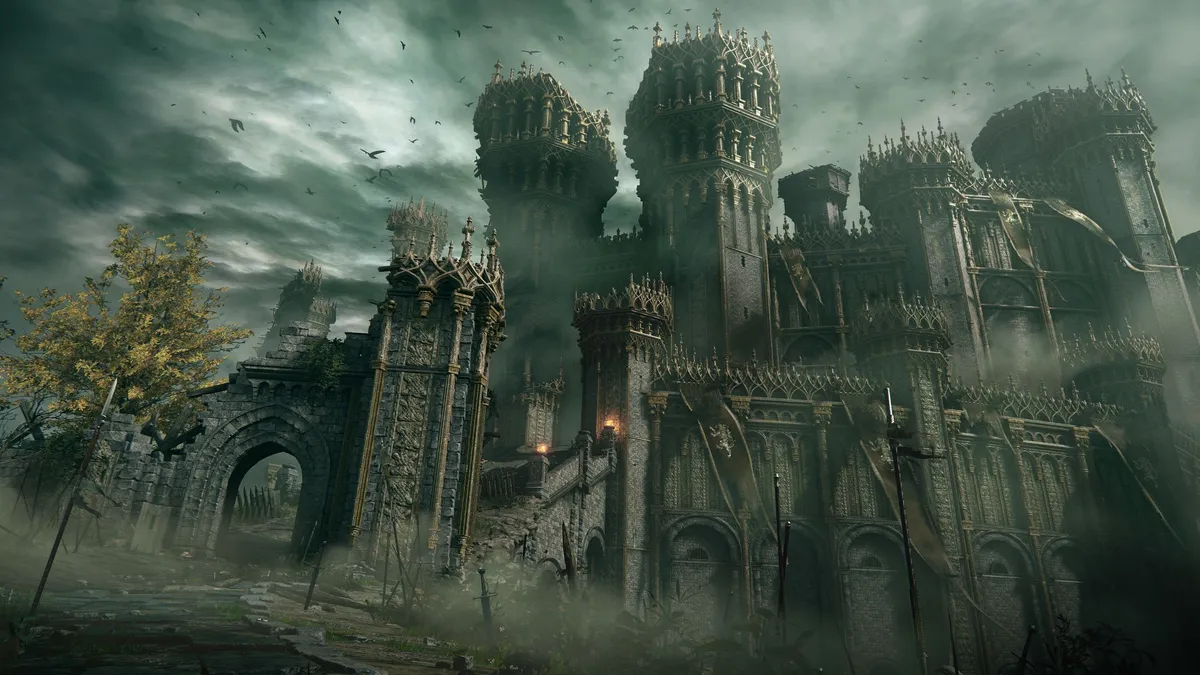
The game's also refreshingly honest about the nature of difficulty and growth. It doesn't pretend that getting better at hard things feels good in the moment. It's frustrating. It's exhausting. It makes you want to quit. But it shows you, through direct experience rather than abstract principle, that the frustration is part of the process, not a sign that something's wrong. We live in an era that pathologizes discomfort, that treats any negative emotion as a problem to be solved or avoided. The game says no, actually, frustration and repeated failure are how you develop capacity. The discomfort isn't a bug, it's the feature. And by forcing you to push through that discomfort repeatedly—because there's no easier path available, no way to bypass the challenge—it builds a kind of emotional resilience that transfers to everything else. You learn that you can tolerate more frustration than you thought. You discover that persistence through difficulty actually works. You internalize the pattern of struggle, adaptation, and eventual breakthrough in a way that no amount of motivational content or positive thinking could provide. And this matters enormously when you're in the middle of a difficult quarter, when the strategy isn't working yet, when you're three months into a turnaround and still not seeing results—the game has already taught you that this is what genuine progress feels like, that the struggle means you're in the learning zone rather than failing.
What's particularly valuable about experiencing this through a game rather than through actual high-stakes challenges is the safety of the context. The consequences of failure are minimal—you lose some runes, you have to retry the section, worst case you get frustrated and take a break. But the emotional and cognitive experience of struggling, failing, adapting, and eventually succeeding is real. You're building genuine capacity for handling difficulty, developing actual problem-solving skills, practicing persistence under pressure—all in a context where failure is low-cost and iteration is rapid. It's a training ground for the mindset and skills you need for real challenges, but without the career consequences or relationship damage or financial risk that comes with failing at things that actually matter. You can practice getting destroyed and recovering from it over and over until the pattern becomes automatic, until your default response to difficulty is analysis and adaptation rather than avoidance or despair. When that difficult business situation arrives—the deal that's falling apart, the product launch that's failing, the strategy that's not working—you've already practiced the emotional and cognitive response pattern hundreds of times in a safe environment.
The game also does something interesting with the concept of fairness. It's brutally difficult, but it's not random or arbitrary. Every death is comprehensible in retrospect. You got greedy with that extra swing. You dodged the wrong direction. You didn't manage your stamina properly. The game is harsh but it's not unfair—it has rules, it follows them consistently, and if you learn those rules and execute properly, you'll succeed. This is a more useful model for business than either the "everything is random and unfair" narrative or the "hard work guarantees success" mythology. The game says that reality has patterns, that you can learn them, that competent execution based on genuine understanding produces results—but also that it's going to be hard, that you'll fail repeatedly while learning, and that nobody's going to make it easier for you or give you points for trying. It's a bracingly honest framework that respects your intelligence and capacity while refusing to coddle you. Markets have patterns. Customer behavior has patterns. Competitive dynamics have patterns. You can learn them, but the learning process will involve significant failure and frustration, and the market won't care about your feelings while you're figuring it out.
There's also something about the aesthetic of it all—the dark fantasy setting, the sense of being a small figure in a vast and indifferent world, the way the game makes you feel simultaneously insignificant and capable. You're just another Tarnished, attempting what countless others have attempted, most of them failing. The world doesn't care if you succeed. The gods and demigods you're challenging vastly exceed your power. And yet, through persistence and skill, you can prevail. That framework—you're small and the challenge is enormous but you're not helpless—feels more true to actual experience than either the "you're special and destined for greatness" narrative or the "you're powerless and nothing matters" nihilism. You're not special. The challenge is genuinely difficult. And you can still choose to develop the capacity to meet it. This maps perfectly to business reality—you're a small player in a massive market, your competitors have more resources, the forces arrayed against you are substantial, and you can still win through superior execution and genuine skill development.
The punishment the game delivers for mistakes also trains a crucial business skill—rapid recovery from setbacks. You die, you respawn, you run back to where you were, you try again. There's no lengthy recovery period, no time to wallow in how unfair it was or how close you were to succeeding. The game pushes you immediately back into action, forces you to try again while the lesson is fresh, demands that you get back up and execute better this time. This rapid iteration cycle—fail, analyze quickly, adjust, execute again—is exactly the pace that competitive markets demand. You can't afford to spend weeks processing your feelings about a failed campaign or a lost deal. You need to extract the lesson, adjust your approach, and get back in the game. The psychological conditioning that Elden Ring provides—immediate recovery from failure, quick analysis, rapid re-engagement—is precisely what's required to maintain momentum in business when things aren't working. The game teaches you that the recovery time from failure is entirely under your control, that you can choose to get back up immediately, that the only thing standing between you and the next attempt is your willingness to try again.
And there's something valuable about how the game handles success differently from failure. When you finally beat that boss that's been destroying you, the victory is real but temporary. The game doesn't stop to celebrate with you. It doesn't give you a parade or an achievement ceremony. You get your runes, you level up, and then the next challenge is waiting. This is much closer to actual business reality than the way we usually treat success. You close the big deal, and that's genuinely valuable, but the market doesn't pause to appreciate your accomplishment. The next challenge is already here. Competitors are already adapting to what you just did. Customer needs are already evolving. The game trains you to appreciate success without becoming attached to it, to learn from victory without assuming it means future challenges will be easier. This emotional pattern—satisfaction without complacency, confidence without arrogance—is exactly what sustainable business success requires.
The pattern recognition skills the game develops are also directly applicable to business strategy. You die to a boss twenty times, and somewhere around death fifteen you start seeing the patterns. This attack combo always ends with a specific move. That wind-up telegraphs a grab. This phase transition happens at this health threshold. You're training your brain to find patterns in chaos, to identify the underlying structure in what initially seems random, to predict what's coming based on subtle cues. This is precisely the skill set that separates good strategists from mediocre ones—the ability to see patterns in market behavior, to predict competitor moves based on past actions, to identify the underlying dynamics that explain surface-level volatility. The game gives you hundreds of hours of practice in pattern recognition under pressure, in situations where identifying the pattern faster means success and missing it means failure. That training transfers directly to business contexts where the ability to read patterns in customer behavior or market dynamics or competitive positioning determines whether your strategy succeeds.
Perhaps most crucially, the game teaches you that competence is contextual and has to be earned repeatedly. You master one area, move to the next, and discover that your previous success means nothing here—new enemies, new mechanics, new patterns to learn. This constant return to beginner's mind, this regular experience of moving from competence back to struggle, trains a kind of intellectual humility that's invaluable in business. You can't rest on past achievements. You can't assume that because you succeeded in one market, you'll succeed in the next. Each new challenge requires fresh learning, new pattern recognition, adapted strategies. The game makes this pattern visceral and immediate in a way that business lessons learned over years usually aren't. You feel the humiliation of being competent five minutes ago and helpless now. And that feeling—properly processed—becomes a defense against the kind of arrogance that leads successful people to expand into markets they don't understand or make bets outside their competence zone.
So yes, it's humbling to close a significant deal and then immediately get destroyed by a game for three hours straight. It's deflating to feel competent in your professional life and completely overwhelmed in the Lands Between. But that deflation, that humiliation, that forced return to beginner's mind—it's valuable. It keeps you honest. It reminds you that mastery in one domain doesn't eliminate the need for learning in another. It demonstrates that real growth requires genuine struggle rather than just positive thinking or sufficient confidence. And it provides a safe space to practice the pattern of failing, learning, adapting, and persisting that's actually required for any worthwhile challenge, whether that's defeating Malenia or navigating a difficult market transition or building something meaningful in your career. The game doesn't care about your credentials or your recent wins. It cares about what you can actually do, right now, with the situation in front of you. And that ruthless focus on present competence rather than past achievement or future potential is exactly what makes it such effective training for business, where markets are indifferent to your track record and care only about whether you can execute today, in current conditions, against present challenges. The punishment isn't cruelty—it's clarity. And that clarity, properly absorbed, becomes the foundation for genuine resilience when business inevitably delivers its own version of getting stunlocked by rats right after you thought you'd mastered the game.